
Your Garage Door Springs Are Doing More Work Than You Think
Every time you open or close your garage door, the springs are doing the heavy lifting — literally. A standard two-car garage door can weigh between 150 and 250 pounds, and it's the springs that counterbalance all of that weight so your opener doesn't have to do it alone. Over time, those springs wear out, and when they fail, your garage door can become inoperable or even dangerous.
Here in Fayetteville, we get calls about broken springs more than almost any other garage door issue. It's one of the most common repairs we handle at Fayetteville Garage Door Co, and the good news is that understanding your springs can help you stay ahead of a breakdown before it leaves you stuck.
How Long Do Garage Door Springs Last?
The lifespan of a garage door spring is measured in cycles. One cycle equals one full open and one full close of the door. Most standard torsion springs are rated for approximately 10,000 cycles, which translates to roughly 7 to 10 years of average use.
However, that number can vary depending on several factors:
- Frequency of use: If your garage door is the primary entry point to your home — which is common for many families in Fayetteville and across Lincoln County — you may be cycling it four to six times a day or more. That adds up quickly.
- Spring quality: Not all springs are created equal. Higher-grade springs rated for 20,000 or even 25,000 cycles are available and can last significantly longer.
- Maintenance: Springs that are regularly lubricated and inspected tend to last longer than neglected ones.
- Climate: Tennessee's temperature swings — from hot, humid summers to cold winter mornings — cause the metal in springs to expand and contract repeatedly, which can accelerate wear over time.
Torsion Springs vs. Extension Springs: What's the Difference?
There are two main types of garage door springs, and knowing which type you have can help you understand what to expect when it comes to replacement.
Torsion Springs
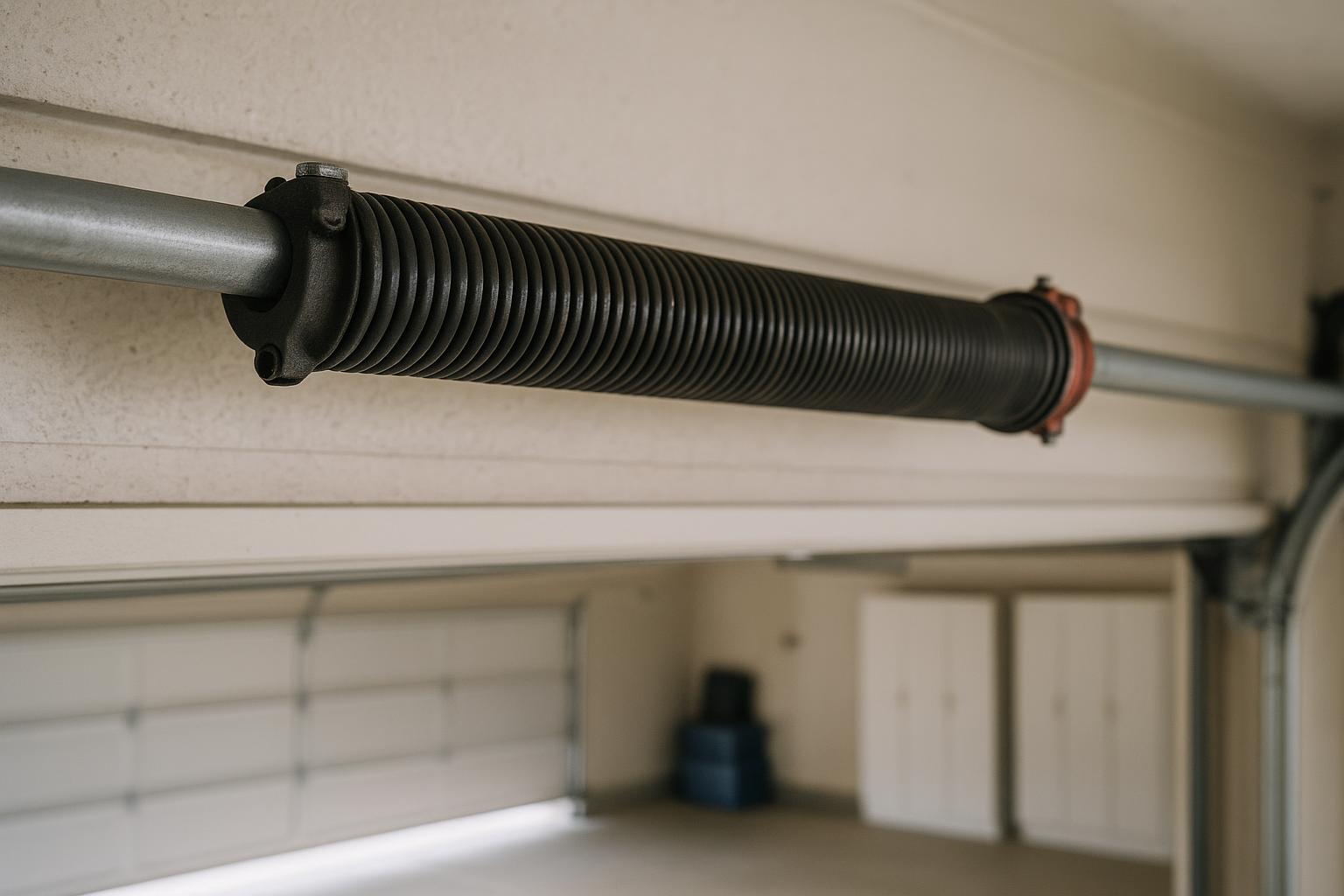
These are mounted on a metal shaft above the garage door opening. They use torque to lift the door and are the more common type found on modern garage doors. Torsion springs tend to be more durable, offer smoother operation, and are generally safer when they break because they remain on the shaft.
Extension Springs
These run along the horizontal tracks on either side of the door. They stretch and contract to provide lifting force. Extension springs are typically found on older or lighter garage doors. When they break, they can snap and fly across the garage, which is why safety cables should always be installed with them.
If you're unsure which type you have, a quick visual inspection of the area above and around your garage door will usually tell you. Or you can give us a call, and we'll walk you through it.
Warning Signs Your Springs Are Wearing Out
Springs rarely fail without some warning. Here are the most common signs that your garage door springs are nearing the end of their life:
- The door feels heavier than usual: If you disconnect the opener and try to lift the door manually, it should move relatively easily. If it feels extremely heavy or won't stay open on its own, the springs are likely losing tension.
- The door opens unevenly: If one side of the door rises faster than the other, one spring may be weaker or already broken.
- Visible gaps in the spring coils: A torsion spring that has broken will have a visible gap in the coils, usually near the center. This is one of the clearest indicators.
- Loud bang from the garage: Many homeowners in Fayetteville have told us they heard a loud bang — like a gunshot — coming from the garage. That sound is almost always a spring snapping. If this happens, do not try to operate the door.
- The opener struggles or stops working: Your garage door opener is designed to work with the assistance of springs. If the springs are failing, the opener has to work much harder, which can burn out the motor.
Can You Replace Garage Door Springs Yourself?
We understand the DIY spirit — it's strong here in Fayetteville and throughout the surrounding communities. But garage door spring replacement is one job we strongly recommend leaving to professionals. Here's why:
- High tension is involved: Torsion springs are under an enormous amount of tension. Improper handling can result in serious injury or even death.
- Specialized tools are required: Replacing torsion springs requires winding bars and other tools that most homeowners don't have and shouldn't improvise.
- Incorrect installation causes problems: If the springs aren't properly matched to the weight of your door or wound to the correct tension, the door won't operate safely or efficiently.
A professional can typically complete a spring replacement in under an hour, and the peace of mind is well worth it.
Should You Replace Both Springs at the Same Time?
If your garage door has two torsion springs and one breaks, we almost always recommend replacing both at the same time. The reasoning is simple: both springs were installed at the same time and have experienced the same number of cycles. If one has failed, the other is likely close behind.
Replacing both springs together also ensures balanced operation and saves you from paying for a second service call in the near future. It's a small additional investment that makes a big difference in the long run.
How to Extend the Life of Your Garage Door Springs
While springs will eventually wear out no matter what, there are steps you can take to maximize their lifespan:
- Lubricate regularly: Apply a silicone-based or white lithium grease lubricant to your springs every three to four months. This reduces friction and prevents rust.
- Schedule annual maintenance: A professional tune-up once a year allows a technician to inspect your springs, check tension, and catch small issues before they become big problems.
- Upgrade to high-cycle springs: If you're replacing springs, ask about high-cycle options. They cost a bit more upfront but can last two to three times longer.
- Keep the door balanced: An unbalanced door puts uneven stress on springs. If you notice your door isn't sitting level when closed, have it checked.
Fayetteville Garage Door Co Is Here When You Need Us
Whether your spring just snapped this morning or you're noticing the early warning signs, our team at Fayetteville Garage Door Co is ready to help. We serve homeowners and businesses throughout Fayetteville, as well as Shelbyville, Lynchburg, Winchester, Tullahoma, and Pulaski, with fast response times and honest, upfront pricing.
Don't wait until a broken spring leaves you stranded — or worse, causes damage to your door or opener. Give us a call today to schedule an inspection or spring replacement, and let's make sure your garage door is working safely and smoothly.