
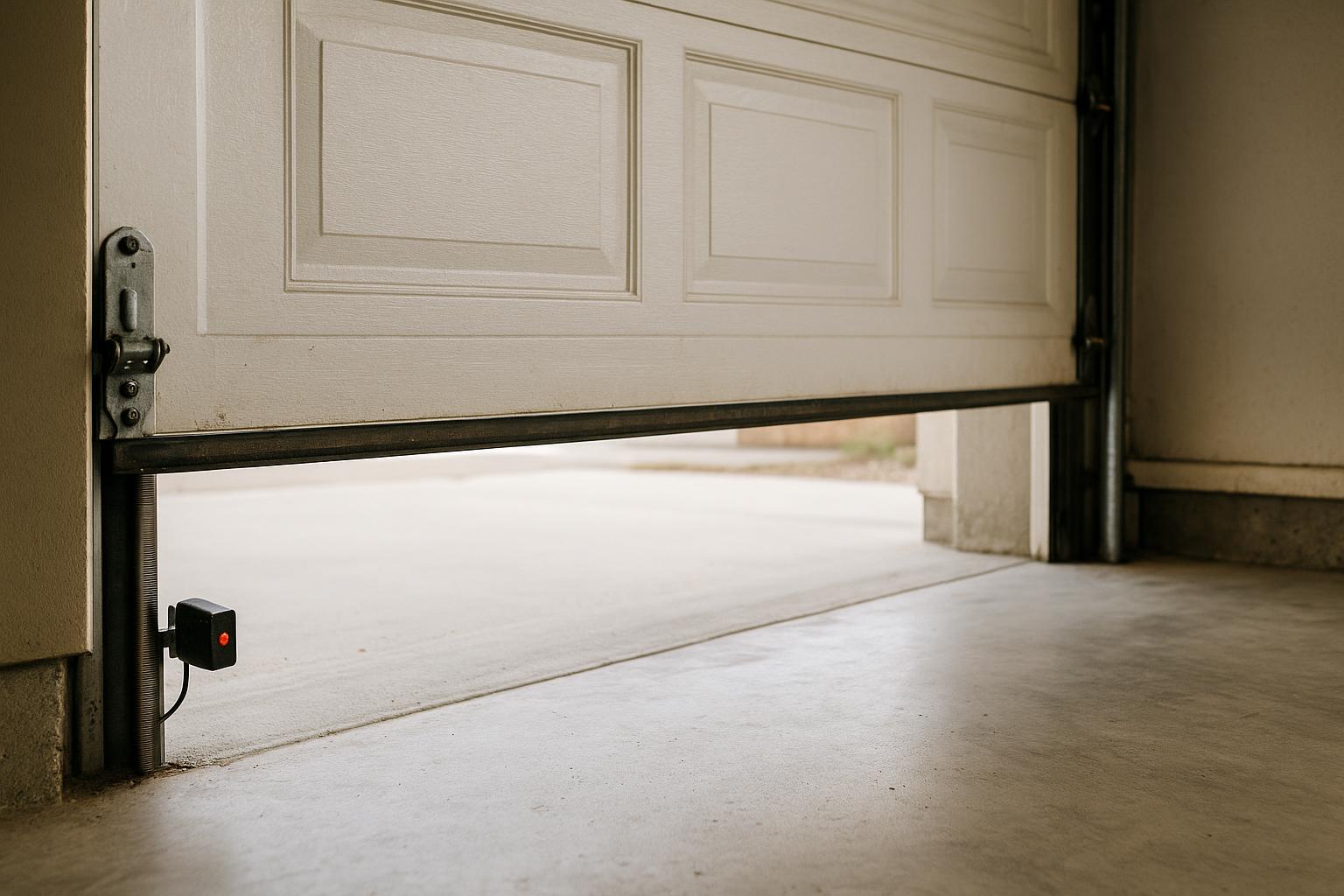
A Common Frustration for Fayetteville Homeowners
You press the button on your garage door remote, the door starts its descent, and then — just before it reaches the floor — it stops and reverses back up. You try again. Same thing. Maybe it works on the third try, maybe it doesn't. Either way, you're left standing in your driveway wondering what went wrong.
This is one of the most common garage door problems we see here at Fayetteville Garage Door Co, and it's especially frustrating because the door seems like it should be working. The good news is that the cause is usually identifiable and fixable. Let's walk through the most likely reasons your garage door reverses before closing all the way and what you can do about each one.
1. Misaligned or Dirty Safety Sensors
This is the number one cause of a garage door that reverses before touching the ground. Every modern garage door opener is equipped with two small photo-eye sensors mounted near the bottom of the door tracks on either side. These sensors send an invisible beam across the opening. If something breaks that beam — a person, a pet, a leaf, or even a cobweb — the opener interprets it as an obstruction and reverses the door as a safety measure.
Here's what to check:
- Alignment: Both sensors need to face each other directly. If one gets bumped — which happens easily from a bike tire, a lawnmower, or even kids playing — the beam is broken and the door won't close. Look for a steady green light on both sensors. A blinking light usually means they're out of alignment.
- Dirt and debris: The lenses on these sensors are small and exposed. Dust, spider webs, and grime from everyday garage use can block the beam. A gentle wipe with a clean cloth often solves the problem immediately.
- Sunlight interference: In Fayetteville, especially during summer afternoons, direct sunlight hitting one of the sensors can overwhelm the infrared beam. If your garage faces south or west, this could be the culprit during certain times of day.
2. Incorrect Close-Limit Settings
Your garage door opener has built-in limit settings that tell it how far the door should travel when opening and closing. If the close-limit setting is off — even slightly — the opener may think the door has hit something before it actually reaches the floor. The opener's safety programming kicks in, and the door reverses.
Adjusting the close-limit switch is usually done with a small screw or dial on the opener unit itself. However, if you're not comfortable working with the opener's controls, this is a quick fix for a professional technician. Over-adjusting can cause the door to press too hard against the floor, which creates a different set of problems.
3. Worn or Broken Springs
Garage door springs do the heavy lifting — literally. They counterbalance the weight of the door so the opener doesn't have to work as hard. When a spring is worn, weakened, or broken, the door becomes significantly heavier for the opener to manage. The opener may sense this extra resistance as an obstruction and reverse.
Signs of spring trouble include:
- The door feels unusually heavy when you try to lift it manually
- You hear a loud bang from the garage (a spring breaking)
- The door opens unevenly or looks crooked
- Visible gaps in the spring coils
Important: Garage door springs are under extreme tension and can be dangerous to replace without proper tools and training. This is one repair we always recommend leaving to a professional. Our team handles spring replacements across Fayetteville and the surrounding Lincoln County area regularly, and we keep common spring sizes on our trucks for same-day service.
4. Damaged or Obstructed Tracks
The metal tracks that guide your garage door up and down need to be clean, straight, and properly aligned. A dent in the track, a buildup of debris, or a section that has shifted out of alignment can cause the door to bind or hesitate during travel. When the opener encounters this resistance, it may reverse as a safety precaution.
Visually inspect the tracks on both sides of the door. Look for obvious bends, gaps where the track meets the brackets, or anything lodged in the track channel. Minor debris can be cleaned out, but bent or misaligned tracks typically need professional attention to avoid making the problem worse.
5. Opener Force Settings Need Adjustment
In addition to limit settings, most garage door openers have force settings that control how much power the motor uses to open and close the door. If the closing force is set too low, the opener won't push hard enough to bring the door all the way down and will reverse instead.
This sometimes happens after a power outage resets the opener or after a new opener is installed without fine-tuning. Your owner's manual will show you where these adjustments are, but small incremental changes are key. You want the door to close fully without slamming or pressing too hard against the floor seal.
6. Worn Rollers or Hinges
Over time, the rollers that ride inside the tracks and the hinges connecting your door panels can wear out. Worn rollers create friction, and stiff or rusted hinges can cause the door to bind at certain points during travel. This added resistance can trigger the opener's auto-reverse feature.
If your door has been making grinding or squeaking noises along with the reversing issue, worn hardware is a likely contributor. Roller and hinge replacement is a straightforward repair that also makes the door noticeably quieter — something your family and neighbors in Fayetteville will appreciate.
When to Call a Professional
Some of these fixes — cleaning sensors, checking for debris in the tracks — are safe and easy for most homeowners to handle. Others, like spring replacement, track realignment, and opener adjustments, are best left to experienced technicians who work with these systems every day.
If you've tried the basic troubleshooting steps and your garage door is still reversing, or if you're not sure what's causing the problem, don't keep forcing it. Repeatedly running a malfunctioning door can cause additional damage to the opener, the door panels, or the hardware.
At Fayetteville Garage Door Co, we diagnose the issue before we start any work, and we explain exactly what needs to be done and what it will cost. No surprises. We serve homeowners and businesses throughout Fayetteville, Shelbyville, Lynchburg, Winchester, Tullahoma, and Pulaski with honest pricing and fast response times.
Keep Your Garage Door Running Smoothly
A garage door that reverses before closing is more than an inconvenience — it's a security concern. An open garage is an invitation for weather damage, pests, and theft. The sooner you identify and fix the issue, the better.
If you're dealing with a reversing garage door or any other garage door problem, give us a call. We'll get it sorted out so you can get back to pressing that button and trusting that the door will do its job.